

“Soil health is the continued capacity of the soil to function as a vital, living ecosystem that sustains life.”
The smell and feel of healthy orchard soil should be obvious.
In a webinar, Shannon Cappellazzi, Oregon State University soil health specialist, said growers and orchard managers should recognize soil health needs and when to apply them.
Functions of soil include water infiltration, storage and filtration, nutrient cycling and storage, habitat for organisms, atmospheric gas regulation, medium for plant growth, and an engineering medium. Soil and plants work together, Cappellazzi said, to perform all the work soil needs to do. Plants protect the surface, decrease erosion, and regulate soil temperature and moisture. Plant roots create flow pathways for water infiltration and movement. The roots also exude carbon into soil and feed microorganisms.
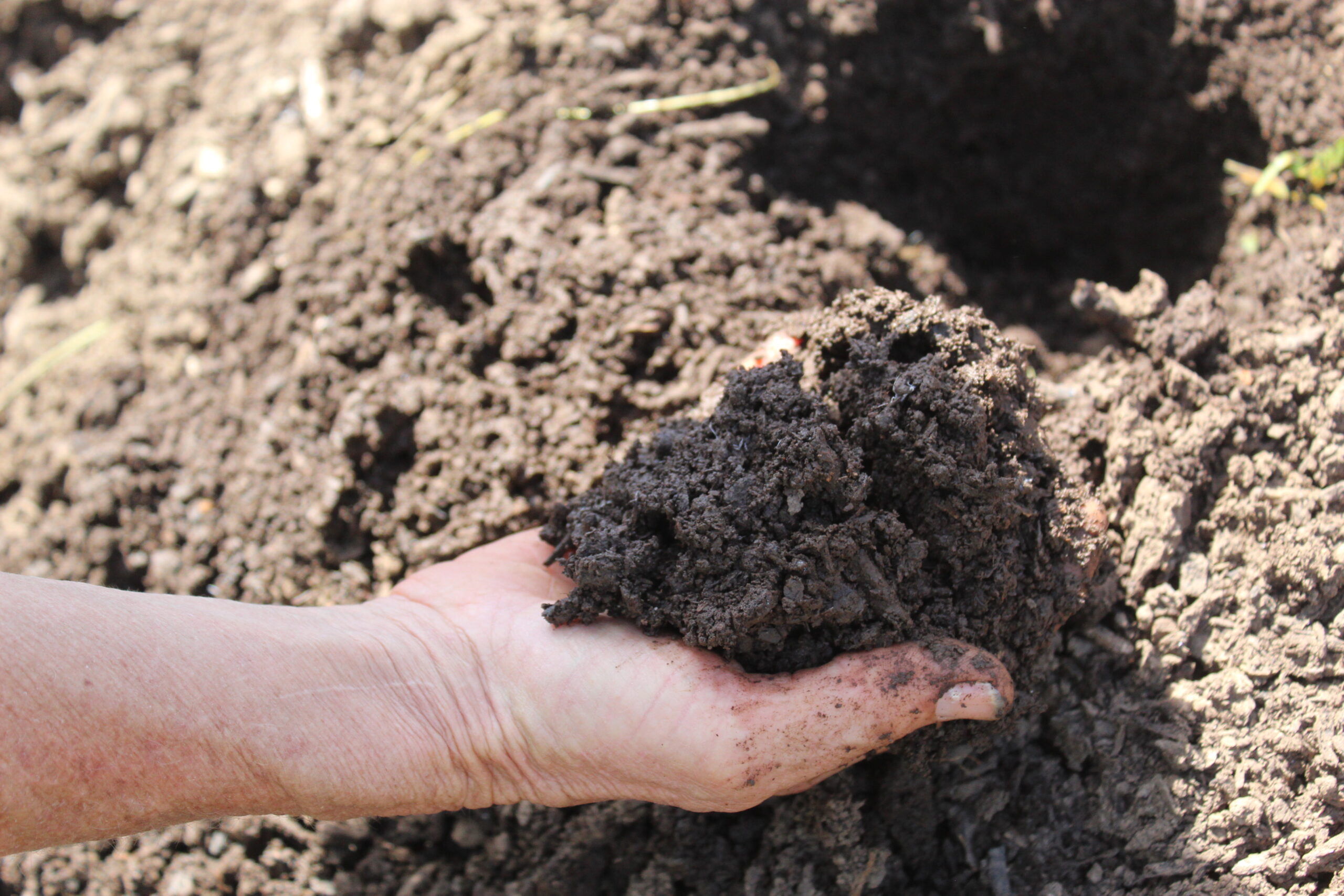
Soil functions also rely on microbes, which make nitrogen from the atmosphere and organic matter available to plants. Healthy soils sustain microbes, which increase root surface areas of plants, increasing their ability to scavenge nutrients and water. Microbes also build aggregates and soil structure. Soil aggregation is the process where small soil particles bind into larger clusters, creating a network of spaces. This structure is vital because it prevents compaction, allows roots to push through the earth easily, and provides essential air and water. Clumped soil creates loose pathways so soft root tips move downward without hard blocks.
Cappellazzi said that microbes also provide chemical communication in the form of volatile organic compounds to signal stressors, including drought, pest or disease pressure. An optimal soil microbiology in a healthy orchard is highly active, redundant and well fed. There is high alpha and beta diversity with a range of bacteria, archaea, fungi and macroscopic organisms.
Soil health can be increased with a number of well-known methods: increasing live roots in the soil, increasing soil cover, increasing diversity of plants, minimizing disturbance and mindful integration of livestock.
Cover crop planting
Planting a cover crop can supply all of these soil health needs. Cappellazzi said in Oregon hazelnut orchards, most maintain a clear tree row and cut down on herbicides. Selection of cover crop is key for management as well as soil health. The crop should be short in the fall, not bunchy or leave large holes when terminated. Grasses or cover crops are short prior to nut fall when harvest is done with sweepers and vacuums. All production systems, she said, can take and apply different methods of cover cropping and still move toward improving soil ability to function. Effective soil cover types are diverse. They can be alive or a mulch to prevent erosion and foster microbial communities. With a growing cover crop, a diverse mix of plant types is recommended. Cappellazzi said increased diversity above the ground also fosters an increase in microbial diversity.
As for termination of ground cover, Cappellazzi said there are options, and tillage is one of them. Livestock grazing is also an option but must be carefully managed to avoid overgrazing. In a three-year cover crop study in hazelnuts, she said that herbicide use was reduced and mowing prior to nut fall was advised.
Cappellazzi also explored the costs and benefits of planting cover crops. She noted there may be different responses by soil type, landscape position, history and species. Short-term direct costs, she said, normally lead to long-term gains. Besides erosion prevention and microbial habitat, cover crops reduce soil temperatures during the hot summer months. In a hazelnut orchard, she suggests that lower soil temperature decreases evaporation, which increases late-season water and more available water can increase yields.
Tracking soil health improvements involves consistency and comparing within your soil health sampling group.