

Legumes, plants from the bean family, are known for their ability to add nitrogen to the soil. This makes them a popular choice in cover cropping, supplying both nitrogen for the cash crop and potentially reducing fertilizer needs. Depending on the species, legumes can provide a wide range of nitrogen fixation rates.
For example, a pure stand of red clover can fix 40 to 60 pounds per acre, while hairy vetch can fix 90 to 200 pounds per acre. With imported fertilizer costs on the rise, in-field nitrogen fixation is becoming of greater interest. However, unlike commercial products, the amount of nitrogen fixed can vary significantly.
Assessing Nodulation in the Field
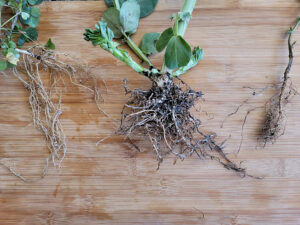
In this article, we will focus on root nodulation, the plant organ directly involved in nitrogen fixation, and what it means when this process goes wrong. Whether your legumes look healthy or not, it is always important to assess their performance. Start your assessment by carefully digging up the whole root system to about one foot. Do not pull up the plant, as roots and nodules can break off. Gently wash the roots and examine the system, noting the presence, condition and location of nodules.
A shovel, a soil test kit and a few pink nodules from a healthy plant are your best diagnostic tools.
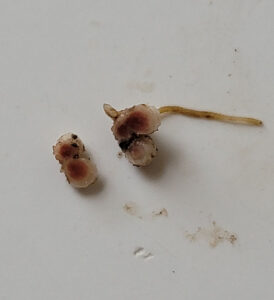
Healthy nodulation is demonstrated by plants having 20 or more nodules, mostly on the primary roots and many secondary roots. The nodules should range from 2 to 5 mm in diameter, be firm, white or tan on the outside and pink or red on the inside.
Poor or failed nodulation can present in a number of ways: failure to form nodules, poor establishment with fewer than five nodules per plant, white or green nodule interiors, mushy or rotten nodules, and nodules only on the taproot.
When Nodules Fail to Form
Possible causes of no nodulation include no or low populations of rhizobia bacteria present in the soil, in which case legume seed should be inoculated with the correct species before planting. Reasons for low levels of bacteria include fumigation, high temperatures, drought conditions and/or long periods of time with no host plants in the soil. As a general rule of thumb, if there hasn’t been a legume planted in the soil for several years, seed inoculation is recommended.
If the seed had been inoculated but there are no nodules present, then the inoculant may have died. This could be caused by heat, direct sunlight, mixing inoculant with tap water that contained chlorine, or the inoculant expiring in storage or being improperly stored. Another possibility is that the wrong rhizobia strain was used. For example, Rhizobium leguminosarum is used for peas and vetch and Bradyrhizobium japonicum for soybean.
This same issue can arise if the soil was sterilized or fumigated. Recent fumigation may have killed off the soil biology and can potentially kill inoculation material on the seed coat. In this case, it is recommended to wait the prescribed period after fumigation before planting. Seed inoculation should be recommended in post-fumigation soils, as the previous rhizobia population was likely killed.
Troubleshooting Poor Nodulation
For problem-solving when there are few or scattered nodules, you will need to take a soil test or reference a previous one.
High nitrogen levels could be a cause. For legumes, maintaining rhizobia bacteria and fixing nitrogen is a costly process. If abundant nitrogen is present, the legume won’t form nodules. In this situation, a legume cover crop may not increase nitrogen levels further.
Low soil pH could also be a factor. Rhizobia are pH-sensitive, preferring a pH of 6 to 7. Below 5.5, nodulation can fail. Recommending a lime application with a target pH of 6.5 is ideal in this situation. However, check the preferred pH level of the cash crop. Increasing pH in acid-loving blueberries will cause economic harm, while some other cash crops, like alfalfa, prefer a pH of 6.8 to 7.
Compaction can also cause few nodules. Compacted soil restricts root growth, which reduces plant performance. Tilling or using cover crops with deep taproots can help break up compaction. It is advisable to avoid using heavy equipment on wet soils.
The final potential cause of limited nodulation is poor seed-to-soil contact. In this instance, very little of the inoculant may have reached the roots. In this case, ensure thorough inoculation and a firm seedbed, and incorporate the seed after planting.
When Nodules Form but Aren’t Functioning Properly
There are four possible causes of issues when nodules are present but are white or green. Each of these issues involves conditions that cause plant stress.
If soils have been soggy for a prolonged period or are waterlogged, the microbes responsible for nitrogen fixation were starved of oxygen. Oxygen is a critical component of the nitrogen-fixing process. When there is little oxygen, leghemoglobin, the component responsible for the red color in nodules, breaks down. It is best to advise against planting legumes in frequently waterlogged areas.
Opposite of waterlogging is drought stress. Nodules are highly sensitive to dry conditions and may reduce activity during periods of prolonged water stress. Should dry conditions be an issue, irrigate if possible. Choosing drought-tolerant legume varieties can also help, like the common vetch found in Seeds for Bees’ Nitrobuilder blend.
Extreme temperatures, generally above 95 degrees F or below 50 degrees F, can affect plant stress and root growth. It is prudent to adjust the planting date so that the legumes can get the best start or avoid particularly difficult weather.
The final cause is herbicide carryover. Some soil-residual herbicides can inhibit nodulation. It is important to read labels thoroughly, follow rotation intervals and be aware that herbicide residues can affect cover crop performance.
The last scenario for this article is when nodules are present but are small or only located on the taproot. There are three common causes of this.
The first is late inoculation, meaning the plant was colonized late in the growing season and not at the onset of germination. This could be a case of uninoculated seed that didn’t come into contact with rhizobia until later. The solution for this is to have the seed inoculated before planting.
Low phosphorus, sulfur, potassium or molybdenum could also be a cause. These plant nutrients are essential for nodule formation and nitrogenase activity. This can be remedied by applying fertilizer that contains the missing nutrients. However, a soil sample should be taken before assuming this is the cause. If levels are low, a foliar molybdenum spray could help midseason.
Aluminum toxicity is the final potential cause of this section. This can be an issue in acidic soils where aluminum can damage root tips. Depending on the aluminum levels in the soil, suggesting a lime application to raise the pH may help.
In summary, most nodulation failures trace back to three things: wrong or dead inoculant, low soil pH or excess nitrogen. A shovel, a soil test kit and a few pink nodules from a healthy plant are your best diagnostic tools.
If you are interested in learning more about cover crops and what they can do for you, Seeds for Bees offers a number of educational videos through Project Apis m.’s YouTube channel, including a webinar on estimating the total nitrogen content of cover crops: Seeds for Bees® How do Cover Crops Fix Nitrogen and How Much?
Publisher’s Take
The Big Picture: What to do Next
1. Dig, don’t pull
Carefully excavate the root system so nodules aren’t lost before evaluating their number, location, size and color.
2. Consider inoculation history
Low rhizobia populations, an incorrect strain or inoculant damaged by storage, heat or other conditions can contribute to nodulation failure.
3. Check soil conditions before making a recommendation
High nitrogen, low pH, compaction and nutrient deficiencies can all affect nodulation.
4. Don’t overlook water and weather stress
Waterlogging, drought and extreme temperatures can reduce nodule activity even when nodules are present.
5. Review pesticide history
Fumigation can affect rhizobia populations, while residual herbicides can interfere with nodulation and cover crop performance.
