

“Fumigation is under the microscope.”
That’s how Roger Isom, president and CEO of the Western Tree Nut Association (WTNA), describes the current regulatory environment surrounding fumigation in California agriculture.
“The regulatory agencies, whether it’s Department of Pesticide Regulation, Air Resources or local air districts, EPA, there is a lot of attention being paid to fumigation,” Isom said. “And unfortunately for us, it’s a necessary part of the business. People aren’t going to buy our product if they find bugs in it.”
That increased scrutiny can have practical consequences for fumigation.
“We have permits being held up. We have situations where we can’t perform a fumigation because we’re up against some regulatory limit,” Isom said. “We’ve got to be in front of that. We can’t be at a point where I’ve got product sitting there and I can’t fumigate it.”
The pressure extends across several types of fumigation. Growers continue to deal with rodents in the field, while soil fumigation remains under scrutiny, particularly the use of 1,3-D. Postharvest and structural fumigation are also critical for controlling pests such as red flour beetle and Indian meal moth.
Export requirements also affect fumigation decisions for tree nuts.
“We export 70% of our tree nuts, and it’s hard to argue with somebody that said they opened up the container in Europe and said, ‘Hey, it’s infested,’” Isom said. “What are we going to do? So we’ve got to control it on the front end.”
In some cases, importing countries also require specific fumigation treatments to prevent pests present in the U.S. from entering their countries, he noted.
Isom and other industry and regulatory speakers discussed these challenges during a fumigation summit hosted by WTNA in July. The event brought fumigation professionals, regulators and industry members together to discuss regulatory requirements, worker safety, compliance, new technology and ways to improve fumigation performance.
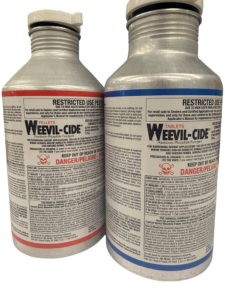
Getting the Treatment Right
For John Mueller, owner of The Fumigation Company, improving fumigation performance starts with treating an application as a scientific process rather than simply completing a task.
“Fumigants were born from pretty deep science, and many times applicators treat fumigants as really just tactical tasks when we really have to take that science and move it forward in our applications,” Mueller said. “If we ignore what’s needed for these tools to be effective, then that’s when we fall off on them.” Mueller said several factors determine whether a treatment is successful, including identifying the correct pest, reaching an effective fumigant concentration, accounting for temperature and maintaining the necessary gas concentration for enough time.
Data can help applicators determine whether those conditions were met.
“We’re analyzing temperature, concentration, and we’re turning that around and critically reviewing that and making sure that our specifications are where they need to be to be most effective,” he said.
One of the most common problems Mueller sees is pest misidentification. Certain pests are more difficult to kill than others, making accurate identification important when determining treatment requirements.
Temperature measurements can also create problems when they don’t represent the conditions most likely to affect treatment performance. Mueller said applicators sometimes take a convenient temperature measurement rather than identifying the lowest temperature present during a treatment. “That’s what determines, that’s where your failure is going to be at,” he said.
Reviewing those variables becomes particularly important when a treatment does not produce the expected result.
“Be scientifically curious,” Mueller said. “Really start to ask a lot of questions. Why?”
Rather than simply moving on from an unsuccessful treatment, he recommends reviewing the available information and looking for the conditions that may have contributed to the problem.
“If you don’t like the results, sit down with all the information you have and start to plot that to try to understand why there was a challenge with that treatment,” he said.

More Pressure to Prove Performance
The ability to document treatment performance is also becoming more important, according to Mueller. He said foreign departments of agriculture are beginning to use artificial intelligence to review fumigation documentation and question treatment results, increasing the need for verification and validation.
“It’s driving verification and validation techniques like connected devices and really putting a lot of pressure on the fumigator to prove that they’ve been effective,” Mueller said. “And that’s not going to stop. That’s going to get more intense.”
Mueller said connected gas-monitoring devices are one tool being used to document gas concentrations and determine whether treatments reach expected efficacy levels. Mueller said fumigant prices have risen significantly, putting additional pressure on fumigators to demonstrate that growers and processors are receiving value from each treatment.
“When spending goes up, commodity processors, commodity growers, they want to make sure they’re getting value for the dollars,” he said. “Sometimes you have to lean into technology to drive that.”
Compliance Starts With the Basics
Some of the compliance issues county agricultural officials encounter are much more basic.
Melanie Pellegrino, supervising agricultural inspector for the Stanislaus County Agricultural Commissioner’s Office, said paperwork and worker protection requirements are among the common fumigation-related compliance issues her office sees.
That includes maintaining written respiratory protection programs, completing annual fit testing and making sure employee medical evaluations remain current.
“Always a reminder just to check medical records, that sometimes there’s limitations and expirations to those, and making sure those are current as well,” Pellegrino said.
Stanislaus County Agricultural Commissioner Linda Pinfold said field applications of aluminum phosphide present another area where applicators need to pay close attention to worker protection requirements.
“A common issue that we have come across has been not having the personal protective equipment, specifically phosphine monitors when using that equipment, when applying aluminum phosphide in the field,” Pinfold said.
Pellegrino said applicators also need to consider where fumigation and other pesticide applications are taking place. Public concern around pesticide use is another consideration, particularly near schools, children and other sensitive areas.
She recommended paying close attention to applications near sensitive sites and public roadways and considering additional planning when there is a greater chance of interaction with the public.
“Maybe have flaggers, look at schedules and timing, and communicate better in those areas,” Pellegrino said.
Odor complaints are another common reason the agricultural commissioner’s office hears from the public, Pinfold said. In many cases, people want to understand what they are smelling and what is happening nearby.
“A lot of times getting that level of communication really does go a long way,” she said.
“It’s important that we do our job helping to make sure that everybody’s following those rules, so that way those tools remain available.” – Linda Pinfold
Compliance and Keeping Tools Available
Pinfold said the role of the agricultural commissioner’s office goes beyond issuing violations. She compared the office’s enforcement role to that of a referee, making sure pesticide rules are followed so the products agriculture depends on can continue to be used.
“Pesticides are an incredibly important tool, not just for production agriculture, but for human health and safety,” she said. “It’s important that we do our job helping to make sure that everybody’s following those rules, so that way those tools remain available.”
Pellegrino said the loss of pesticide products can also create other pest management challenges. As the number of available insecticides declines, growers and applicators can become increasingly dependent on the products that remain.
“The alternative is now your toolbox is so limited, and that is not necessarily a better thing,” she said.
Pinfold pointed to resistance management as one consequence.
“Less tools means you use the same materials over and over again, which means you develop resistance,” she said.
For applicators unsure about a requirement, both encouraged reaching out to the local agricultural commissioner’s office before a compliance issue develops.
“The folks that are reaching out to us regularly and seeking advice and trying to stay up on the regulations are the ones that are being very successful and having less compliance issues,” Pellegrino said.
More Scrutiny Ahead
Isom expects regulatory attention surrounding fumigation to continue.
He said DPR has indicated commodity fumigation will receive closer examination after work involving structural and soil fumigation. Commodity fumigation itself encompasses a range of practices, including stockpile, bin, tarp-static, container and truck fumigation.
“All those things need looked at very closely to make sure, are we doing it right? Are we doing it safe? Is that the best way we can do it?” Isom said.
Soil fumigation will remain part of the discussion as well. Isom said DPR continues to examine 1,3-D use and that the industry needs to continue studying potential alternatives.
“They don’t have any cost-effective alternatives to 1,3-D,” he said. “But that’s not going to stop them from continuing to look.”
Isom said the industry also needs to continue studying alternatives and evaluating whether there are more effective or economical ways to fumigate. Cost will remain part of that equation as growers contend with higher expenses for fertilizer, pesticides, labor and other inputs.
“Is there a cheaper way to do this that’s still effective?” he said. “Those are the best solutions, the ones that can save money. They just don’t come along very often.”
For Isom, preparing for the changes ahead comes down to keeping up with both regulation and technology.
“Make sure you’re up to speed on all the regulations,” he said. “Make sure you’re up to speed on what are all the new technologies. Stay informed.”
For Pellegrino and Pinfold, that also means using regulators as a resource before questions become problems.
“If you’ve got a question, use us,” Pinfold said. “We’ll do whatever we can to help support folks.”
Publisher’s Take
The Big Picture: What to do Next
1. Stay ahead of regulatory requirements
Fumigation is receiving increased regulatory attention, making it important to keep current on requirements before an application is planned.
2. Get the fundamentals right
Pest identification, temperature, fumigant
concentration and exposure time can all determine whether a treatment succeeds.
3. Document treatment performance
Monitoring and connected devices can help verify that effective fumigant concentrations were reached and maintained.
4. Don’t overlook basic compliance
Respiratory protection programs, fit testing, current medical evaluations and required PPE remain common areas of concern.
5. Ask questions before there is a problem
County agricultural commissioners can be a resource for interpreting requirements and addressing compliance questions before an application.
