

Olive fruit fly (OFF) pressure remains high in California’s olive oil and table olive production, with growers facing continued challenges from limited control options and increasing insecticide resistance.
During a recent UC Ag Experts Talk webinar, UC IPM Area Advisor Sudan Gyawaly discussed olive fruit fly and soft scale biology, ecology, monitoring and management in California olives. While olive fruit fly directly affects fruit quality across all olive-growing regions, soft scale infestations can reduce tree vigor and overall health.
Although all olive varieties are susceptible to OFF, Gyawaly said larger-fruited varieties—including Sevillano, Manzanillo and Mission—tend to experience the highest infestation levels. In these varieties, pupae are generally healthier and heavier, develop more quickly and have higher survival rates. Fruit firmness and volatile compounds also influence susceptibility.
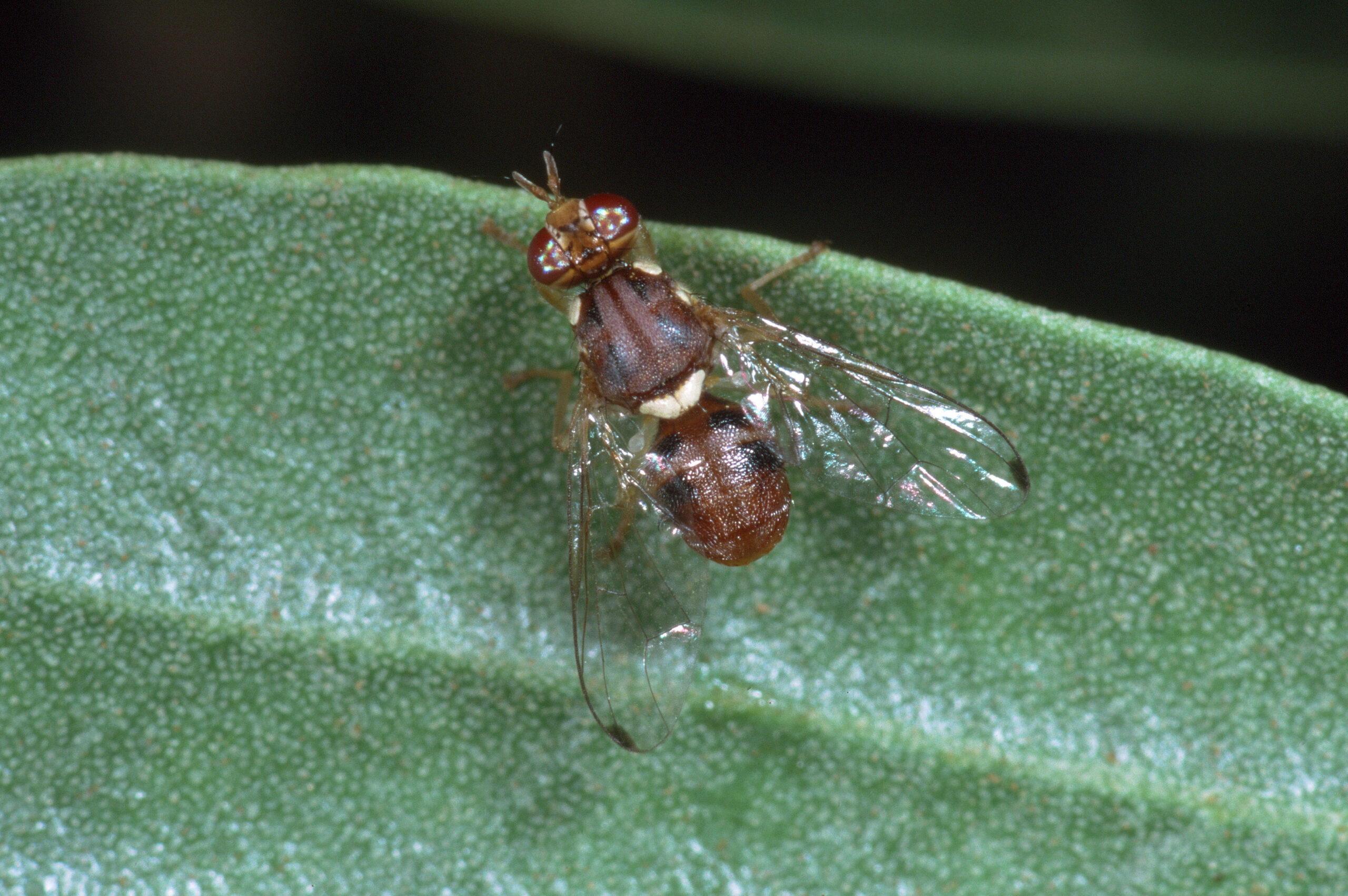
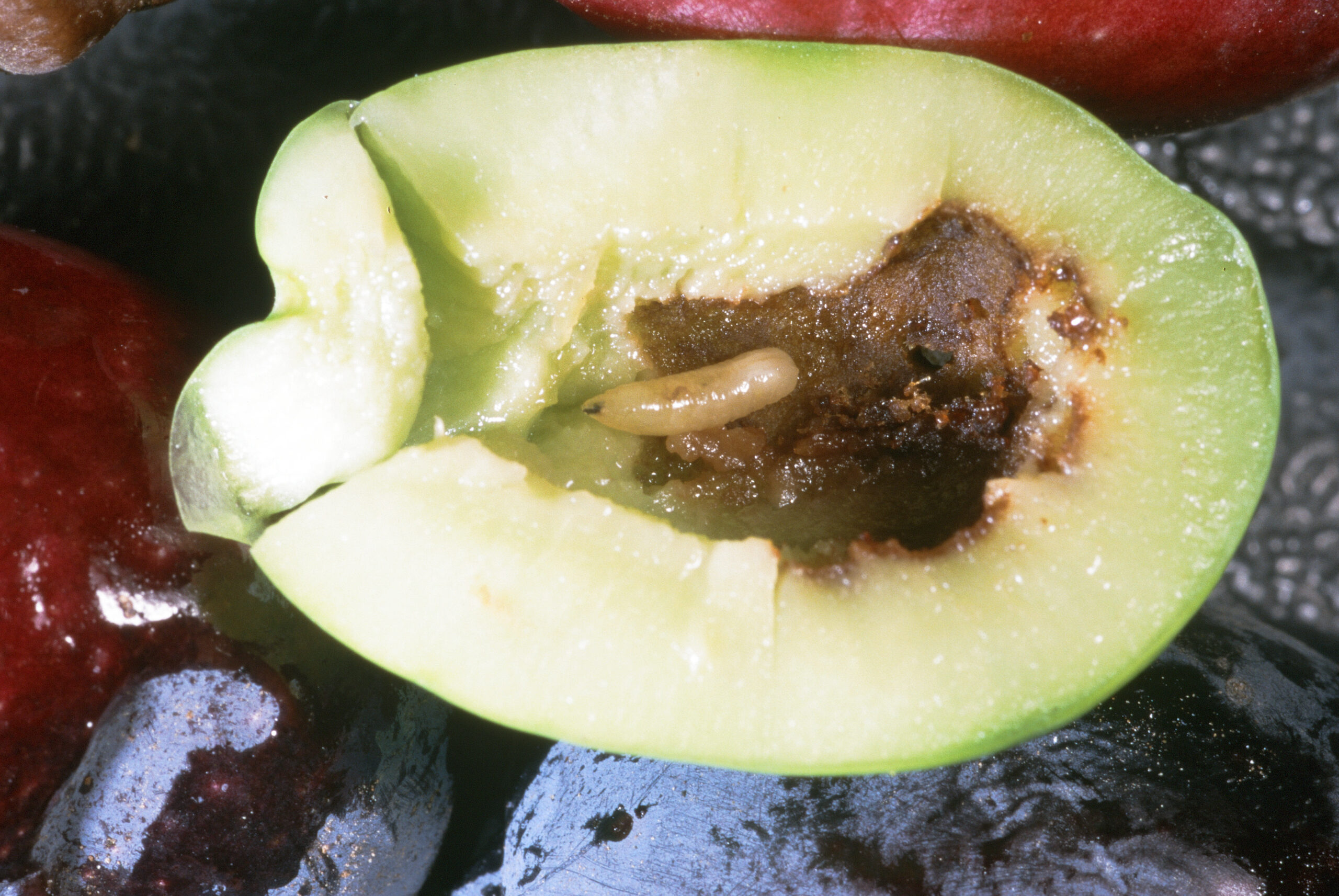
In California, olive fruit fly typically completes three to four generations each year. Adult females lay eggs beneath the fruit skin, and larvae hatch within two to three days. The larvae feed inside the fruit for approximately 20 days before pupating. During the spring and summer generations, mature larvae drop to the ground to pupate, where they overwinter before emerging as adults.
Monitoring Is Critical
Monitoring remains one of the most important tools for managing olive fruit fly populations.
Gyawaly recommends placing two traps in every 5- to 10-acre block by March 1. Traps should be positioned in the middle of the canopy in shaded, open areas.
Common monitoring options include:
- McPhail bucket traps baited with attractant
- Olive traps baited with yeast and water
- Yellow sticky traps baited with ammonium carbonate, pheromone or both
Although there are no established treatment thresholds for olive fruit fly, monitoring provides valuable information on pest pressure and treatment timing.
“Monitoring can also be really handy when it comes to evaluating the efficacy of your treatment,” Gyawaly said.
Management Options
Both chemical and biological management options are available.
Many smaller and organic growers rely on mass trapping by placing monitoring traps throughout the orchard, sometimes at a rate of one trap per tree. Gyawaly noted that this approach may not provide adequate control under high pest pressure.
Cultural Management
Cultural practices also play an important role. Removing all remaining fruit after harvest helps reduce overwintering populations, while preventing fruit production on unmanaged landscape trees can eliminate important sources of infestation.
Managing black scale may also help because honeydew provides a food source for adult flies during the summer.
Biological Control
Biological control has provided only limited suppression. Several parasitoid species were introduced and evaluated, but climatic differences and seasonal gaps in host availability limited long-term establishment.
Chemical Control
Historically, chemical control has relied primarily on spinosyn fruit fly baits and the pyrethroid insecticide Danitol.
Fruit fly bait is typically applied at 10 to 20 ounces per acre using a large droplet size. Applications should target the upper half of the canopy, particularly on the north or east side of the tree, and should begin as fly populations increase.
Danitol can provide rapid knockdown of high populations during late summer and fall. However, good spray coverage is essential, and applications made before late August may disrupt beneficial insects that help suppress scale and mite populations.
Another option is the kaolin clay product Surround, which coats the tree with a white film that discourages egg laying. Two to three applications are generally required for effective protection.
Managing Olive Fruit Fly and Soft Scale
Gyawaly said growers face two major challenges when managing olive fruit fly with insecticides: a limited number of available active ingredients and increasing resistance to spinosad.
Several scale species attack olives in California, including:
- Black scale
- Olive scale
- Oleander scale
- California red scale
These insects feed by piercing plant tissue and removing sap, reducing tree vigor. They also excrete honeydew, which promotes sooty mold growth and interferes with photosynthesis.
Monitoring and Treatment Decisions
Monitoring should be conducted in April and October, when honeydew accumulation is greatest, to estimate population levels.
Treatment decisions should be based on infestation severity. Gyawaly noted that severe infestations generally exceed 10 scales per branch.
Cultural management includes pruning to open the canopy and improve sunlight penetration, as well as controlling ants, which interfere with the natural biological control of scale insects.